
Business Details
Emergency
services
Your Trusted Partner for Veterinary Care in Bogalusa, LA
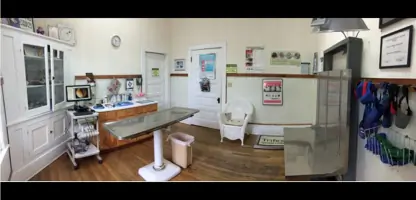
Animal Clinic Of Bogalusa has been serving pets and their owners in Bogalusa and surrounding areas for over 45 years. Our full-service veterinary hospital provides comprehensive medical care, including general surgery, dentistry, diagnostics, preventative medicine, nutritional counseling, and flea control for dogs and cats. Since 1995, we have maintained a commitment to excellence through advanced medical practices and compassionate care. Our facility expansion in 2001 allowed us to separate clinical operations from boarding services, enhancing patient comfort and care quality. We prioritize client education and preventive care to ensure pets live longer, healthier lives.Our team of experienced veterinarians and support staff remains dedicated to continuous learning and adoption of modern veterinary techniques. We operate with transparency, emphasizing clear communication and ethical treatment standards. Our emergency services and after-hours support demonstrate our unwavering commitment to pet health. With decades of combined experience, we have built a reputation as a trusted partner in animal healthcare. Our mission remains focused on delivering personalized care that addresses each pet's unique needs.


Services
Boarding
Dental Care
In House Diagnostics
Radiography
Ultrasound
Emergency Services
Surgery
Flea Control
Nutritional Counseling
Preventative Medicine
Highlights and features
- We offer 45+ years of veterinary expertise in Bogalusa.
- Our full-service hospital handles emergencies 24/7.
- We provide state-of-the-art diagnostics and surgical care.
- Our team includes experienced veterinarians with advanced training.
- We maintain separate facilities for clinical and boarding services.
What people say
Miracle recovery
Compassionate staff
Successful surgery
Patient and kind
Never giving up
Services
Boarding
Our veterinarian-supervised boarding provides secure, temperature-controlled accommodations for dogs and cats. Pets receive multiple daily walks, outdoor exercise, and prescription diet accommodations. Flea control measures ensure all guests' safety and comfort during their stay.
Dental Care
Comprehensive dental services include cleanings, x-rays, extractions, and periodontal treatment. We use digital imaging and ultrasonic scalers to maintain oral health, preventing systemic diseases linked to dental issues in pets.
In House Diagnostics
Onsite laboratory capabilities enable rapid diagnosis through blood work, urinalysis, and parasite testing. We utilize advanced equipment for complete blood counts, electrolyte analysis, and specialized cytology to guide treatment decisions.
Radiography
Digital radiography provides immediate imaging of bones, organs, and internal structures. This technology aids in diagnosing fractures, tumors, heart conditions, and gastrointestinal obstructions with minimal patient discomfort.
Ultrasound
High-frequency ultrasound creates real-time images of abdominal organs and soft tissues. This non-invasive technique offers detailed visualization of liver, kidney, and cardiovascular systems for accurate diagnosis.
Questions
What if I notice parasites on my pet?
We recommend immediate treatment with modern preventatives that safely eliminate parasites while protecting your pet's health.
How should I handle worms in my pet's stool?
Contact us for fecal testing to identify specific parasites and receive targeted treatment to prevent human transmission.
Why is nutrition important for my pet?
Proper nutrition prevents disease and maintains vitality. We offer specialized diets formulated for optimal pet health.
When should puppies and kittens have first exams?
Puppies need exams at 6-8 weeks; kittens at 9 weeks for early vaccination and health screening.
Why are annual exams necessary for pets?
Pets age rapidly; annual exams detect issues early, especially for animals over five years old.
What are the benefits of spaying/neutering?
Spaying/neutering prevents disease, controls pet population, and improves long-term health outcomes when done at 4-6 months.